
When Should You Take Your Pet to the Vet? Signs That Need Veterinary Attention

As a pet owner, it is not always easy to know whether a change in your dog or cat can wait or needs veterinary attention right away. Pets often hide pain and illness, so even subtle changes in behavior, appetite, breathing, or activity can be important.
At Petvise Animal Hospital in McKinney, Texas, we provide veterinary care for dogs and cats, including wellness visits, same-day sick appointments, urgent care, diagnostics, surgery, dentistry, and ongoing medical treatment.
Knowing a few warning signs can help you decide when it is time to call your veterinarian.
1. Repeated Vomiting or Diarrhea
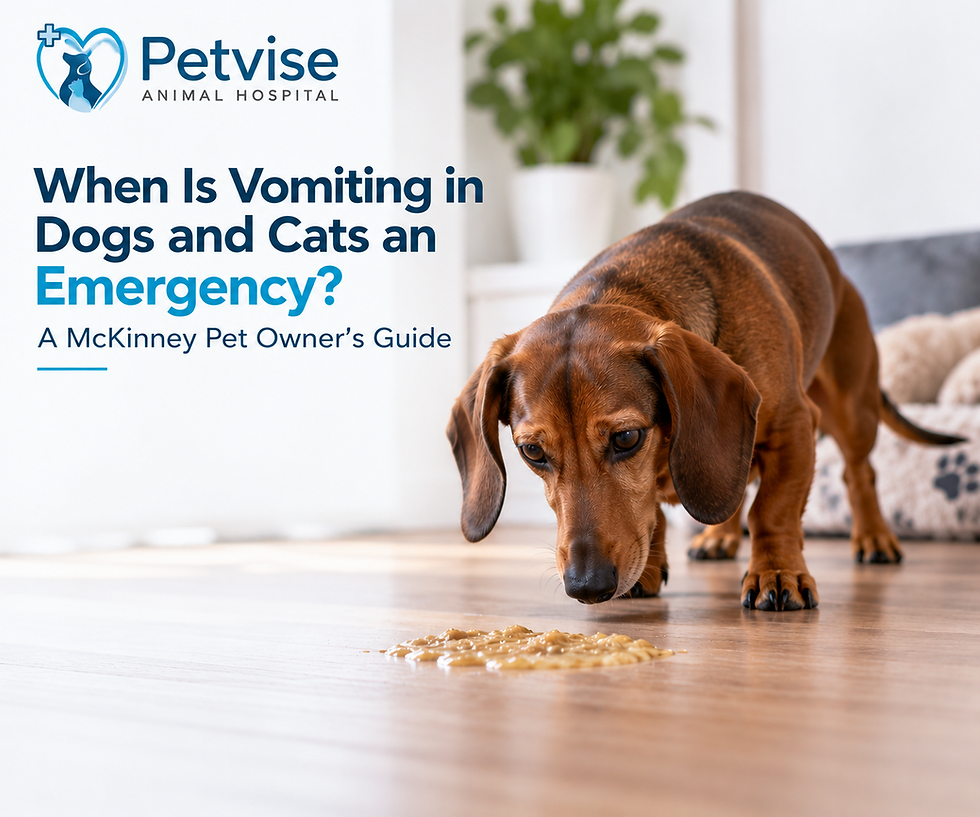
An isolated episode of vomiting or soft stool may sometimes resolve on its own. However, veterinary evaluation is recommended when vomiting or diarrhea:
Happens repeatedly
Contains blood
Is accompanied by weakness or lethargy
Occurs in a puppy, kitten, senior pet, or pet with chronic disease
Prevents your pet from keeping water down
Continues for more than a short period
Vomiting and diarrhea can be associated with dietary problems, intestinal parasites, pancreatitis, infections, foreign bodies, toxins, and many other conditions.
Your veterinarian may recommend bloodwork, fecal testing, X-rays, ultrasound, medications, or fluid therapy depending on your pet's condition.
2. Difficulty Breathing
Breathing problems should always be taken seriously.
Contact a veterinarian promptly if your dog or cat has:
Rapid or labored breathing
Open-mouth breathing, especially in cats
Blue, gray, or very pale gums
Persistent coughing
Wheezing
Collapse or severe weakness
Respiratory problems may be associated with heart disease, lung disease, airway obstruction, allergic reactions, trauma, or other serious conditions.
Severe difficulty breathing is an emergency.
3. Your Pet Stops Eating
Skipping a single meal does not always indicate a serious problem, but a noticeable loss of appetite can be an early sign of illness.
Dogs or cats that refuse food may be experiencing:
Dental pain
Gastrointestinal disease
Kidney or liver problems
Fever or infection
Pancreatitis
Pain
Stress
Foreign-body obstruction
Other systemic illnesses
Cats deserve particular attention because prolonged lack of food can lead to additional medical problems.
If your pet is refusing food and also vomiting, acting weak, hiding, or showing other abnormal signs, contact your veterinarian.
4. Trouble Urinating
Urinary problems can become emergencies, particularly in male cats.
Warning signs include:
Repeatedly entering the litter box
Straining to urinate
Producing only a few drops of urine
Crying or showing pain while urinating
Blood in the urine
Urinating in unusual locations
Excessive licking of the genital area
A completely blocked urinary tract can become life-threatening quickly.
If your cat is repeatedly straining but not producing urine, seek veterinary care immediately.
5. Sudden Weakness, Collapse, or Loss of Balance
Sudden neurological or physical changes should be evaluated promptly.
These may include:
Collapse
Difficulty standing
Walking in circles
Head tilt
Sudden loss of balance
Tremors
Seizures
Extreme weakness
Sudden inability to use one or more legs
The underlying cause can range from metabolic abnormalities and toxin exposure to neurological, cardiovascular, or orthopedic disease.
6. Signs of Pain
Dogs and cats do not always cry when they are hurting.
Signs of pain can include:
Shaking or trembling
Panting when not hot
Hiding
Restlessness
Reluctance to jump or climb stairs
Limping
Difficulty getting comfortable
Growling when touched
Reduced appetite
Changes in posture
Persistent or severe pain deserves veterinary evaluation.
Never give your pet human pain medication unless specifically directed by a veterinarian. Medications such as ibuprofen and acetaminophen can be dangerous or even fatal to pets.
7. Eye Problems
Eye problems can worsen quickly and should not be ignored.
Schedule an examination if you notice:
Squinting
Redness
Cloudiness
Excessive tearing
Yellow or green discharge
Swelling
Pawing or rubbing at the eye
Sudden changes in vision
Corneal ulcers, glaucoma, trauma, infection, and other eye conditions may require prompt treatment to protect your pet's vision.
8. Persistent Ear Problems
Head shaking, scratching, redness, odor, or ear discharge can indicate an ear infection.
Veterinarians commonly perform ear cytology, which involves examining material from the ear under a microscope to identify yeast, bacteria, inflammatory cells, or other abnormalities.
Treating the underlying cause is important because chronic ear infections can become painful and difficult to manage.
9. A Swollen or Painful Abdomen
A suddenly enlarged or painful abdomen can indicate a serious medical problem.
Contact a veterinarian immediately if abdominal swelling is accompanied by:
Repeated unsuccessful attempts to vomit
Restlessness
Excessive drooling
Difficulty breathing
Weakness
Collapse
In large and deep-chested dogs, these symptoms can be associated with gastric dilatation-volvulus (GDV or bloat), which requires emergency treatment.
10. Your Pet Is Simply “Not Acting Normal”
Pet owners know their animals better than anyone.
Sometimes there is no dramatic symptom. Your pet may simply be:
Sleeping more than normal
Hiding
Less interested in playing
Drinking more water
Losing weight
Acting restless
Becoming unusually clingy
Showing changes in bathroom habits
These changes can provide valuable clues.
When something seems unusual, contacting your veterinarian early is often better than waiting for the problem to become more severe.
When Is It an Emergency?
Seek immediate veterinary attention for problems such as:
Severe difficulty breathing
Collapse or loss of consciousness
Uncontrolled bleeding
Major trauma
Repeated seizures
Suspected poisoning
Inability to urinate
Severe abdominal swelling
Heatstroke
Severe allergic reaction
Persistent vomiting with weakness
Pale, blue, or gray gums
If you are uncertain whether your pet's condition is urgent, call a veterinary hospital and describe the symptoms.

Veterinary Care in McKinney, Texas
At Petvise Animal Hospital, we care for dogs and cats throughout McKinney, Frisco, Allen, Fairview, Plano, and surrounding North Texas communities.
Our veterinary services include:
Wellness examinations
Vaccinations
Same-day sick visits
Urgent veterinary care
In-house laboratory testing
Digital X-rays
Ultrasound
Dental care
Soft-tissue surgery
Orthopedic surgery
Dermatology and allergy care
Senior pet care
Laser therapy
Preventive medicine
Early diagnosis can often make treatment easier and give your pet the best opportunity for a successful recovery.
Worried About Your Dog or Cat?
If your pet is showing unusual symptoms or you are unsure whether veterinary care is needed, contact Petvise Animal Hospital in McKinney, TX.
Call Petvise Animal Hospital or book an appointment online today.
We are here to help you understand what is happening and determine the best next step for your pet.


Comments